


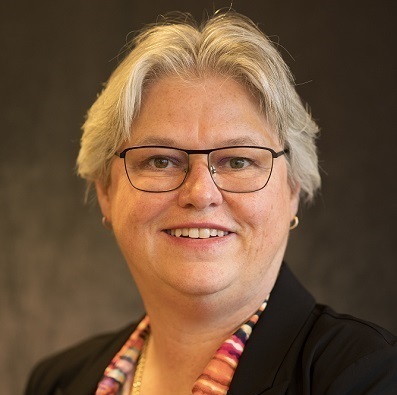
Karin Orsel
Shipowner and Maritime Entrepreneur
If you’re looking for an inspiring success story, then look no further than Karin Orsel. She was only 23 years young when she began her journey as a shipowner and maritime entrepreneur in the charming Dutch village of Farmsum. Owning only six ships manned by a handful of crew, she laid the foundations for something big. Nowadays, Karin stands at the helm as CEO of MF Shipping Group.
Karin Orsel is a prominent figure in the maritime industry, known for her leadership and advocacy for diversity and inclusion. At the age of 23, she co-founded MF Shipping Group, where she has served as CEO since 2001. Under her guidance, the company has expanded to manage and partly own a fleet of over 55 vessels, employing more than 1,000 seafarers and 80 office staff.
In January 2024, Karin was appointed President of the Chair of the European Community Shipowners Association (ECSA), becoming the first woman to hold this position. She also serves as Co-President of the Dutch Shipowner Association (KVNR)and holds board memberships with organizations such as the Interntanko, the International Chamber of Shipping (ICS) and the International Seafarers’ Welfare and Assistance Network (ISWAN), as well as Ambassador and Past President of Women’s International Shipping & Trading Association (WISTA)
Karin’s contributions have been recognized with several accolades, including the “Industry Leader Award 2019” and the “Personality of the Year” in 2019 and 2023. In 2017, she received an Honorary Doctorate in Public Administration from the Massachusetts Maritime Academy for her significant impact on the maritime sector.
The International Maritime Organization (IMO) announced that Karin receives the IMO Gender Equality Award 2024, honoring her dedication to advancing gender equality and empowering women in maritime.
Karin has also been appoionted Norwegian Honorary Consul. The official handover of the consulship took place on 13 February 2025 at the Feithhuis in Groningen. With the approval of the Dutch government, the consulate will be located at the MF Shipping Group office in Delfzijl.
Throughout her career, Karin has been a steadfast advocate for diversity, inclusivity, and the well-being of seafarers worldwide, actively participating in initiatives that promote these values within the maritime community.
Can you describe your current role in the maritime sector and your main responsibilities?
As CEO of MF Shipping Group, I lead an international ship management company with a focus on the well-being of our people, safety, and sustainability. We manage ships for third-party owners and provide excellent customer service, with a strong emphasis on efficiency and reliability. My responsibilities go beyond daily operations; I am actively working on ensuring the future-proofing of the company by focusing on innovation, digitalisation, and strengthening collaborations within the sector. I am chair of the European Shipowners / ECSA and hold board positions at the Dutch Ship Owners Association (KVNR), Intertanko, Thun Tankers BV and GENCO Shipping & Trading LLC and have recently become the honorary consul of Norway. These roles help me represent the maritime sector more broadly.
What are your main priorities and challenges as CEO of MF Shipping Group?
My priorities are ensuring safe and efficient operations and creating a positive working environment for everyone, both in the office and at sea. The well-being of our people is central. The biggest challenges include growing regulation, the pressure to become more sustainable, and attracting the right people with the right skills. Particularly, balancing technical and non-technical skills is crucial, especially now as the sector digitalises and collaboration between diverse cultures becomes increasingly important.
How did you enter the maritime sector, and what motivated you to become a ship manager/owner?
My career in shipping began by chance. I was working in financial administration and accidentally got involved in the maritime industry. When the company went bankrupt, I had the opportunity to take it over. With the support of a good accountant and other advisors, I decided to take the leap. What fascinated me was the dynamism and international nature of the sector. Every day is different, and the global connections and passionate people I have met make it unique. I’ve learned a lot about shipping, leadership, and collaboration, and I remain motivated by the constant changes in the industry.
Were there any critical moments or obstacles that influenced your career path?
Certainly. One of the biggest obstacles was being taken seriously as a young woman in a traditional industry. I led people who were often older and more experienced. This was not always easy, but it made me strong in the belief that leadership is not about age or gender but about decisiveness, knowledge, and integrity. By staying true to myself, communicating openly, and building trust, I was able to earn respect.
How do you combine your role as CEO with your contribution to maritime policy as Chair of ECSA?
Thanks to a great team in the office and the trust of our partners, I am able to balance these roles. The key is balancing operational responsibilities as CEO with strategic international thinking for maritime policy. My work at ECSA allows me to represent the European maritime sector and contribute to the future of the industry. Since I work from practice, I understand the daily challenges shipowners and managers face, ensuring the policy aligns with reality.
You are involved in organisations such as ICS, KVNR, Intertanko, ISWAN, and WISTA. How do these roles influence your decision-making?
These roles provide me with a broad perspective on the sector. They enable me to view challenges and opportunities from different angles. This enriches my decision-making and helps me make strategic choices that benefit not only MF Shipping Group but also the sector as a whole. Moreover, through this involvement, I can pick up early signals about what is happening in the industry.
How have your contributions to maritime associations shaped your view of the sector?
They have shown me that collaboration is key to progress. The maritime sector excels at coming together, especially during crises. The COVID-19 pandemic, for instance, was a time when the sector demonstrated that we can be flexible and find solutions together. It proved that as a sector, we can achieve much when we collaborate.
You have received awards such as the Seatrade Diversity & Equality Award. What do these recognitions mean to you?
It is a great honour to receive such awards. They confirm that we are on the right path. What I particularly value is the message behind these awards: diversity and inclusion strengthen our sector and make it more innovative. I am proud of the recognition, but it also reminds me of the responsibility I carry to improve the sector further. It gives me the motivation to keep going and to inspire others to take action as well.
What do you believe are the key factors that determine the competitiveness of European and global shipping?
Shipping is essential to Europe’s energy, food, and supply chain security, with European shipping representing 35% of the global fleet, far surpassing the EU’s 15% share of global GDP. However, increasing geopolitical uncertainty and the threat of trade wars underscore the importance of investing in open trade partnerships to ensure Europe’s competitiveness and prosperity.
To retain shipping as a geopolitical asset, Europe must maintain its international competitiveness and ensure a level playing field. This includes investing in partnerships, clean energy transition, and people. Investing in clean fuels and technologies for shipping will not only decarbonize the sector but provide Europe’s maritime cluster with a competitive edge.
The transition requires significant investment. The Draghi report estimates that shipping needs EUR 40bn annually to meet IMO targets for net-zero emissions by 2050. Public investment, particularly through the EU ETS, can support this by funding the production of clean fuels and technologies.
Regulatory simplification is also crucial to maintain global competitiveness. The EU’s commitment to reducing administrative burdens, especially for SMEs, is a positive step.
A successful transition also depends on people. The shift to clean fuels and digitalisation will require reskilling or upskilling 800,000 seafarers globally by the 2030s, with 250,000 needed in Europe alone. Diversity must also be encouraged to bring in fresh ideas and innovation, ensuring shipping remains competitive. Strengthening cooperation between industry leaders, schools, and diversity-promoting organizations is key.
Europe stands at a crossroads. We must create the right conditions to invest, innovate, and compete in the future.
How do you see the role of publicly listed shipping companies evolving?
There is increasing emphasis on ESG (Environmental, Social, and Governance) factors and transparency. Publicly listed companies will increasingly need to focus on sustainability and responsible business models, in addition to profit-making.
You received an honorary doctorate from the Massachusetts Maritime Academy. How should maritime education evolve?
Maritime education should not only provide technical knowledge but also leadership skills such as communication, strategic thinking, and problem-solving. It is important to train the next generation of leaders who understand how sustainability, digitalisation, and geopolitical changes impact the sector.
What qualities and expertise are crucial to succeed today as a shipowner?
Vision, perseverance, and courage are essential. It is important not only to understand the current market but also to anticipate and adapt to future trends. In a time of seafarer shortages and pressure to become more sustainable, it is also critical to invest in technology and people, with a focus on the well-being and development of employees.
What skills have been most valuable in your leadership journey?
Seeing people, listening, giving trust, and decisiveness. The ability to think strategically, step in when necessary, but also step back and give others space, has helped me find the right path. I have developed these skills through experience and learning from others in the sector.
What education or professional training would you recommend for someone wanting to excel in the maritime sector?
A combination of technical knowledge and management skills is essential. Additionally, it is important to keep learning and stay open to new developments. Find a mentor who can guide you, and don’t be afraid to make mistakes—learn from them instead.
How do you see the future of shipping with technological and sustainability developments?
The future of shipping will be both smarter and greener. Digitalisation and automation will make operations more efficient, while alternative fuels and stricter regulations will force the sector to become more sustainable. These developments will require different skills, such as knowledge of technology and sustainability.
What is something you wish you had known when you first started in the sector?
That change always meets resistance, but persistence and belief in your vision ultimately make the difference. I also wish I had known that you don’t have to do it alone—you can be stronger when you surround yourself with the right people.
What has been the most rewarding aspect of your career so far?
Building a strong network and collaborating with people from different cultures has enriched me both professionally and personally. Additionally, I have formed lifelong friendships in this sector.
Which innovations will most impact the maritime sector in the next decade?
Digitalisation and the increasing role of artificial intelligence in ship management will drastically impact the sector.
What have been some of the most difficult moments in your career, and how did you overcome them?
Breaking old thinking patterns and dealing with crises, such as economic setbacks, were difficult moments. Saying goodbye to employees, customers, or ships for business reasons is always tough, especially when we aim for long-term relationships.
What are your main priorities for MF Shipping Group?
My priorities are the well-being and safety of our people and continuing to invest in sustainability and our team. Creating a work environment where people feel valued is crucial to our success.
What are the most valuable lessons you’ve learned, and what drives your passion for shipping?
The most valuable lesson I’ve learned is that a company’s success is not only dependent on strategies or technology but, above all, on the people who do the work and the collaboration we build within the team and with partners. People make the difference. My passion for shipping stems from the opportunity to contribute to a sector that is fairer and more inclusive. I want to ensure that everyone has equal opportunities to develop, regardless of background, gender, or origin. And this also means we remain committed to addressing wrongdoings and ensuring a healthy, respectful work culture for everyone.
What legacy would you like to leave in the maritime sector?
A sector that is more inclusive, equal, and sustainable than when I started.